You picked the floor. You agonized over the species, the grade, the width. You compared hard maple versus soft maple, debated wire-brushed versus smooth, and finally committed. Then the installers finish up and pack their tools — and suddenly there’s a gap where the floor meets the tile in the kitchen, the base molding looks like it belongs in a different house, and you’re staring at a small scratch near the front door wondering whether it’ll haunt you forever. This is the part nobody warns you about: the finishing details. Transitions (the strips that bridge your floor to adjacent surfaces), trim (the molding that frames the floor at walls and stairs), and touch-ups (the fixes for the inevitable dents and scratches) collectively decide whether your maple floor looks intentional and high-end, or like a good floor surrounded by afterthoughts. This guide walks you through every decision in this final phase — what it costs, what can go wrong, and what to insist on before the crew walks out the door.
Why Maple Makes Finishing Details Harder Than Oak
Most finishing-detail advice is written with oak in mind. Maple’s quirks change the calculus in three meaningful ways, and if you don’t account for them, you’ll spend more money fixing things later.
Maple’s color instability is real. Maple yellows noticeably under UV exposure — the Lauzon Flooring technical bulletin on maple species behavior describes this as “ambering,” a warm golden shift that begins within the first few months of sun exposure. This matters for trim because any pre-finished base molding or shoe molding you buy today will be a slightly different color than your floor will be in eighteen months. Installers and finishing contractors interviewed by Fine Homebuilding consistently note that matching maple trim to maple flooring is easier when both are site-finished simultaneously, or when the trim is sourced unfinished and coated on-site in the same batch.
Maple blotches under stain. If you’re staining your maple floor — which is already a risk, since maple’s tight grain resists pigment unevenly — your transitions and trim need to come from a shop that can match a blotchy, uneven tone. Pre-stained maple trim from a big-box store is unlikely to match. The NWFA’s 2024 installation guidelines specifically call out maple as a “difficult-to-stain species” and recommend testing stain compatibility on offcuts before committing to any trim finish.
Maple is harder than many trim woods. Hard maple (Acer saccharum) sits at 1,450 on the Janka hardness scale — harder than red oak (1,290), harder than soft maple (950), and significantly harder than most pine-based trim profiles. This means the floor itself will outlast softer trim, and micro-gouges at the shoe molding line where foot traffic drags dirt will be visible against a harder floor surface. Spec trim in the same species or in a complementary hardwood (white oak, ash) rather than soft pine or MDF whenever your budget allows.
Transitions: The Decisions That Live in Every Doorway
A transition strip is exactly what it sounds like — a piece of material that bridges the gap between two different floor surfaces, or between your floor and a surface at a different height. There are five types you’ll encounter, and choosing the wrong one is the most common finishing mistake in residential installations.
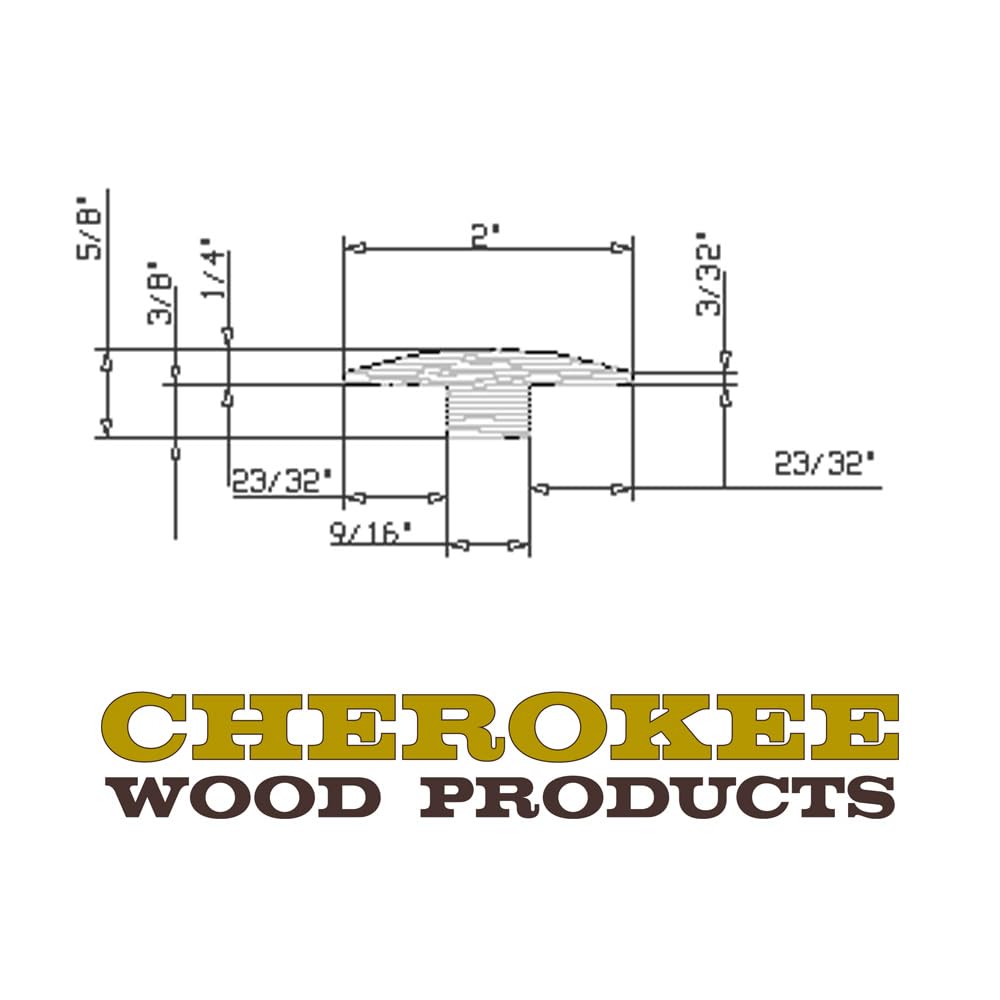
T-molding is the standard choice when two floors of roughly equal height meet in a doorway — say, maple in the hallway meeting maple in a bedroom. The “T” shape straddles both floors. At $2–6 per linear foot for pre-finished solid maple T-molding (sourced from suppliers like Lumber Liquidators or BuildDirect), this is budget-manageable even in a whole-home renovation.
Reducer strips step down from a thicker floor to a thinner one — most commonly from 3/4” solid maple to 1/2” engineered maple meeting ceramic tile. Installers quoted in the This Old House guide on hardwood transitions note that the slope of the reducer is critical: too steep and it becomes a trip hazard; too gradual and the gap underneath collects debris. Standard spec is roughly 1/4” drop over a 1.5” run.
End caps (also called hard-surface reducers) are used where the floor terminates at a vertical surface — a sliding glass door track, a fireplace hearth, a tile threshold. They have a flat top and a lip that drops into a channel. These are easy to get wrong on maple because the cap needs to account for expansion — maple moves significantly with seasonal humidity swings, and a cap installed too tight will buckle when the floor expands in summer.
Threshold pieces are used in exterior doorways and between rooms at different structural heights. In wet climates or at exterior transitions, installers consistently recommend aluminum or stainless cores with a wood veneer cap rather than solid maple, which can swell at an exterior doorway even with finish protection.
Stair nosings — the trim piece that wraps the exposed edge of a step — deserve their own attention. A standard maple stair nosing needs to match the floor’s finish exactly, withstand the highest-traffic spot in the house, and be mechanically fastened (not just glued) per NWFA installation guidelines. On a whole-home job with a staircase, budget $8–18 per linear foot installed for solid maple nosings matched to your floor.
By the Numbers: Transition Costs at Current Pricing (2026)
| Transition Type | Material Cost (per linear ft) | Installed Cost (per linear ft) |
|---|---|---|
| T-molding, pre-finished maple | $2–6 | $5–10 |
| Reducer strip, pre-finished maple | $3–7 | $6–12 |
| Stair nosing, solid maple | $5–12 | $8–18 |
| Threshold / exterior cap | $4–10 | $8–15 |
Prices reflect mid-range national supplier pricing as of mid-2026. Premium or custom-milled profiles from Carlisle Wide Plank Floors or architectural millwork shops will run 2–3× these figures.
Trim: Base Molding, Shoe Molding, and the Gaps Nobody Talks About
Base molding (the vertical trim board that runs along the bottom of walls, sitting above your floor) and shoe molding (the smaller quarter-round or flat profile that tucks between the base and the floor surface) are where most renovation budgets quietly leak.
The standard approach is to keep existing base molding in place, remove it temporarily during installation, and reinstall it with a 1/4” gap above the new floor surface to allow for expansion. The shoe molding then covers that gap. This works fine. The problem with maple specifically is that the 1/4” expansion gap is a minimum, not a target — the NWFA recommends 3/8” to 1/2” for maple in regions with wide humidity swings (the Pacific Northwest, the Gulf Coast, the upper Midwest). Installers who undersize the gap on maple are creating a future buckle.
Pre-finished versus site-finished trim is the core decision. Pre-finished solid maple base from a flooring supplier costs $1.50–4.00 per linear foot and installs the same day the floor goes in. Site-finished trim — raw maple profiled by a local millwork shop, painted or coated on-site with the floor’s finish — costs more upfront ($3–8/linear foot plus finishing labor) but gives you a color match that will age consistently with the floor. For natural or lightly-stained maple floors in high-visibility rooms, the site-finished route is worth it. For utility spaces or rental units, pre-finished is entirely defensible.
MDF base molding is a common cost-save that contractors often don’t mention as a choice. Per Fine Homebuilding’s editorial coverage of trim installation, MDF holds paint well and costs 30–50% less than solid wood base, but it swells at its base edge if the floor ever sees moisture, and it won’t machine-match to a maple floor the way a wood profile will. In bathrooms or laundry rooms adjacent to maple, don’t use MDF base — use painted poplar or, better, a sealed solid wood profile.
One thing that often gets overlooked: door casing undercuts. When a new floor raises the finished surface height, every door casing needs to be undercut (trimmed at the bottom) so the flooring slides cleanly beneath it, rather than butting up awkwardly against the casing face. This is a 5-minute job per door with an oscillating multi-tool, but it’s easy to forget to spec in the installer’s scope. Confirm it’s included before work begins.
Touch-Ups: Maple’s Specific Vulnerabilities
Maple’s hardness protects against deep gouging, but its light color and tight grain make surface scratches more visible than they’d be on a darker or more textured floor. The good news is that most maple touch-up work is manageable without full refinishing — if you catch it early and match the finish correctly.
For surface scratches in a polyurethane-finished floor: Bob Vila’s editorial guide on hardwood touch-ups recommends a two-step approach — a wood stain marker matched to the floor’s base color, followed by a clear finish pen or thin brush coat of the same finish type (oil-based over oil-based, water-based over water-based). Do not apply an oil-based touch-up product over a water-based finish or vice versa; the adhesion fails and the repair looks worse than the scratch.
For deeper gouges: Wax fill sticks in a color matched to the floor work well for solid maple because the floor can be refinished later and the wax is removable. Epoxy fillers are permanent — use them only if you’re certain the floor won’t be refinished within five years.
The ambering problem in touch-ups: This is where maple trips people up. A touch-up product matched to the floor’s original install color will look obviously lighter than the surrounding floor after twelve to eighteen months of ambering. Installers who work frequently with maple — as noted in Lauzon’s species technical bulletin — recommend keeping a sample board of the actual floor in a dark closet (unexposed to UV) and using it as the true-color reference for future touch-ups, rather than matching against the current (yellowed) floor surface.
The Decision Rule
Here’s where the details converge into an if/then framework:
If you have a staircase, wide-plank floor, or high-humidity region: Spend up on site-finished trim and solid maple nosings with oversize expansion gaps. The cost delta versus pre-finished is recoverable in avoided repairs.
If you’re finishing a single room or rental unit: Pre-finished T-molding and standard base molding are entirely appropriate. Prioritize door casing undercuts and correct reducer profiles over premium trim materials.
If your floor is stained: Accept now that transition and trim matching will require a custom tint from your finishing contractor. Don’t try to match pre-finished trim to a stained maple floor — it won’t work, and the mismatch will bother you every day.
Before the crew leaves: Walk every doorway, check every transition for tight coverage, confirm shoe molding is nailed not just glued, and keep at least three linear feet of matching trim in storage. Maple floors last thirty years; the odds are high you’ll need it.
Ready to price out trim for your specific layout? Use the square footage calculator on this site to back-calculate your linear footage of transitions and base molding — most rooms need more than first estimates suggest.